Showing posts with label media. Show all posts

Tuesday, June 09, 2015

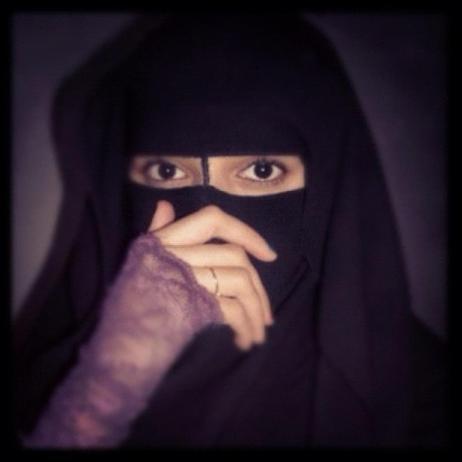
"For me, niqab is a feminist statement."

My piece for AJ+


I’m a writer, a feminist, and an orthodox Muslim (Salafi, to be precise).

I have a fondness for all that is goth, (steam)punk, and Batman. I’m obsessed with leather biker jackets. I’m loud, somewhat annoying, and absent-minded.

And I wear niqab.

To me, niqab is a very feminist statement. By covering my face, by obscuring my physical features from those around me, I am saying: “I alone own my body, and you have no right to me.” My words, my actions, and my mind take precedence over my body, and no one can coerce me otherwise. Wearing niqab does not erase me from society. Rather, it gives me the freedom to engage in it on my own terms, without being bound by others’ demands.

It is the ultimate act of ownership and empowerment.

And I’m fiercely proud of it.

But living in Canada, I get questioned a lot about my choice to wear niqab. My dad grew up in Canada, and my grandparents have lived here for more than 40 years. I’m as Canadian as they come—not despite the fact that I wear niqab, but because of it. The Canadian Charter of Rights and Freedoms, which guarantees me the right to dress the way I please, was taught to me at a young age. It’s ingrained in me. Knowing about it gave me the extra boost of confidence I needed when I chose to wear the niqab seven years ago. I felt secure in the knowledge that no one could ever accuse me of breaking the law, or that I didn’t know what it meant to be Canadian.

“You know you’re in Canada now,” people still say to me in a patronizing tone.

“I know,” I reply coolly. “That’s precisely why I’m wearing what I want to.”

One woman grimaced with distaste at me recently, asking,

“But why do you have to wear all that black?”

“Because I’m goth,” I deadpanned.

No, my entire identity doesn’t rest on the fact that I cover my face and body when I go out. I prefer not to focus on the way I dress, but find myself speaking and writing about it often. I usually end up talking about the legal and social repercussions of niqab, but it’s about a lot more than that for me.

I grew up watching my mother wearing niqab. But my parents didn’t allow me to wear it until I did my own research and considered the meaning and consequences of wearing it. When I put one on, it was with utter conviction that it was something I not only wanted, but needed. It was a reflection and extension of my identity, without being the sum of my existence.

The niqab is more than just a piece of cloth or a political claim. It’s a spiritual statement, an act of worship that I hold between myself and God. It’s not that I consider myself superior to others by wearing it– just the opposite. There are numerous others whose acts of worship may supersede my own. Wearing niqab is one act that I can consistently carry out, and I pray that it brings me at least a little bit closer to God, and to Jannah (paradise).

There are those who ask: “Why, if it’s an act of worship, don’t Muslim men wear it?” And, “Don’t you know that it’s not even a part of Islam?” And there are those who say that I am further sexualizing myself by shrouding.

To them I say: If you really care about my religiosity, research it. But don’t you dare assume I am ignorant about my own faith or that I don’t know what I’m doing or why. As for my sexuality, that’s my own damn business.

The lives of niqabi women do not revolve around our niqabs… and we are not all that mysterious. Some of us are quite open about our activities and even our dress on Facebook, Twitter and Instagram. On social media I joke about the difficulties of “matching all my blacks” (the elements of my clothing: abayah, hijab and niqab); the horror of realizing that I wore my niqab backwards (yes, there really is a right way and a wrong way to wear it!); and that very Canadian problem of getting powdered sugar from my Timbits all over myself and my 5-year-old daughter.

Most of my time is spent doing what I love most, reading and writing about women in Islam. I study historical female figures and challenge cultural Muslim ideas about female sexuality and gender roles. I care deeply about the Muslim community and I’m troubled by the many issues we are plagued with. I strive to put my ideas into action by in my local community, including a series of workshops I’ve developed titled #MuslimSexEd.

I can also be found wandering around downtown taking too many pictures and spending too much money on accessories I buy solely because they make my niqabi outfit look awesome.


In contrast to all this, media and pop culture portray a very different image of what a niqabi woman is, or looks like. Stock photos of “Muslim women” and “niqab” yield a plethora of images that are neither realistic nor practical. The one thing these images have in common is they are almost always taken by non-Muslim photographers, or solely of women in Eastern countries.

AP photographer Hassan Ammar is the latest in a series of lazy efforts to capitalize on niqab-wearing Muslim women… without having to actually engage those women. For others, like Khloe Kardashian, “dressing up” in niqab is a way to up the hypersexual ante. The appropriation of niqab for “artistic purposes” is offensive. We’ve had enough. In France we face steep fines for covering our faces in public. Elsewhere in Europe, the UK, and North America, niqabis face verbal and physical abuse from strangers.

We do not all wear the same black uniform or exaggerated eyeliner. We are not oppressed victims, or brainwashed “Islamists.” We do not need others to speak for us or over us, pretending to tell our stories when we have our own voices and our own cameras, and are fully capable of documenting our lives.

And we are doing so.
Tuesday, April 01, 2014

Dear Canadian Journalists...

This is the original version of my response to Jonathan Kay of the National Post. The summarized, published version can be found here. 
My radio interview with the Tommy Schnurmacher show can be found here.
 
Hello Jonathan Kay,

My name is Zainab bint Younus, and I'm a Canadian Muslim woman who happens to wear the niqaab.

I was only just made aware of your piece: 

The space between hijab and niqab is where our anxieties lie

I am extremely dismayed by not only the sentiments that you shared, but your 'method' of determining why hijaab is acceptable and why niqaab is not (but will be tolerated because you 'other' Canadians are 'civilized').

You begin by describing the 'hijab experience' of a non-hijabi woman whose hijab doesn't affect being "a modern, confident, well-integrated, socially engaged young woman who attends college, goes out on weekends with her friends, and works for a student newspaper. If this is your way of interacting with the world, what difference does a headscarf make?"

With all due respect, the issue of people suddenly putting on the hijab for the 'experience' is actually one which disrespects the voices and experiences of those women who wear the hijaab regularly. Here is one excellent write-up on the phenomenon, provided by the Muslimah Media Watch website:


 http://www.patheos.com/blogs/mmw/2013/02/world-hijab-day-everyones-favourite-dress-up-day/

Now, getting to the crux of the issue.

You speak about Muslim women who wear niqab as an 'other.' You describe 'them' as 'never... having a rollicking good time at pizzerias' and 'more apt to be traveling silently on the subway or unobtrusively taking notes in the back of a trade-college classroom.'

You make assumptions about why women wear niqab in the first place: 'But socially, it's a closed group: The face covering sends the clear message that that they conceive the world to be largely one of leering men and other vulgar social contaminants, against which they must protect every inch of their body - except an eye-slit just big enough to make sure they don't bump into cars and lampposts.'

You take it upon yourself to tell others how women who wear niqab view the world, and to imply that they don't really wear it out of free will:

"But even if it that is so, their "free will" obviously is informed by a paranoid and highly regressive understanding of women's place in society."

And then there's so much more, where you go on to tell us how the "Burqa" (which I have never seen worn in Canada, btw), strips away body language and so on and how that automatically makes us... what? Untrustworthy?

You tell us that if niqabi women experience friendliness, it is one born of anxiety and fear.

You tell us that the niqab accuses everyone of sexual predation in 'all of us.'

Now, where to start?!

Perhaps I should start with how you immediately 'other' women in niqab vs. those in socially-acceptable hijaab.

I, a Muslim woman who wears niqab, grew up in Canada - between Victoria and Vancouver, B.C. "Home" to me, is about Tim Hortons and hiking up Mount Doug and going canoeing and grimacing at non-stop rain and eating 100% organic Canadian maple syrup and singing the Canadian anthem off-key in the car to annoy my family.

My dad grew up in Canada; his parents moved from South African to Canada when he was just 7, and he grew up between Chilliwack and Ontario and regales us with stories of his childhood in the boonies and trekking through several feet of snow just to get to school.

So no, I am not "the other." I'm not an immigrant who can't speak English or who is foreign to Canadian culture. I am Canadian.

You say that you've never seen a niqabi woman just having a rollicking good time. Obviously, you don't know me (or any other niqabi women in Canada, all of whom I can assure you have experienced a 'rollicking good time' at some point or another during their lives).

Niqabi women aren't all 'silent' or 'unobtrusive'; I for one have a pretty loud personality that can't be hidden under any number of layers (or types) of clothing. Friends and strangers alike can attest to the fact that wherever there are raised voices, uproarious laughter, and a debate or two on all sorts of juicy topics... that's where I happen to be, and usually at the center of it (if not the cause of it). And even if a Muslim woman happens to be an introvert... so what?

You claim to know 'why' Muslim women wear the niqab. Very clearly, you don't, nor have you asked a single woman in niqab about why she wears it. Here, I'll help you out.

I wear the niqab because I believe it as an act of worship to God, and a means of identifying myself as a Muslim woman. I do not believe that men (or women) are purely sexual beings without any control over themselves. I do believe that our society has been poisoned by hypersexualization and the commodification of what should be a beautiful thing, and that Muslim or not, men and women alike are suffering on so many different levels because we've been trained to view the other gender as sexual objects, not human beings. (Just check out the research on how kids as young as 7 and 8 are being sexualized and diagnosed with various body image related disorders.)

My role as a Muslim woman is so much more than what you attempt to reduce me to, with your own shallow understanding of what my alleged view of a woman's role in society is. I am a social activist, a writer, an artist, someone who deeply cares about my country and my community and the fact that Stephen Harper's government has led to such huge cutbacks in our social welfare programs that more and more vulnerable young men and women end up on the streets without shelter, food, or safety. I am a feminist who shakes with rage when I hear about the fact that Aboriginal women face some of the highest rates of violence, abuse, and death and yet the Harper government would rather make a big deal out of so-called 'honour killings' - only 3 of which have occurred in Canada within the last 15 years (http://www.vice.com/en_ca/read/why-hasnt-the-canadian-government-called-a-public-inquiry-into-missing-aboriginal-women).

As a writer and social activist, I have already written extensively about my views as a Canadian Muslim woman, which you can see in the following links.

http://thesalafifeminist.blogspot.com/p/on-being-salafi-feminist.html


http://muslimahmontage.com/muslimah-montage-reflections-zainab-bint-younus/

http://www.buzzfeed.com/tasneemnashrulla/32-powerful-and-brutally-honest-tweets-from-lifeofamuslimfem

http://thesalafifeminist.blogspot.com/2011/04/open-letter-to-mona-el-tahawy.html

http://thesalafifeminist.blogspot.com/2011/12/jason-kenney-new-grand-mufti-of-canada.html

http://www.dangardner.ca/notes/item/232-on-faces-and-veils

As a woman - as a feminist - you insult me when you make the snide implication that I can't possibly be wearing it because I 'really' want to.You insult me when you say that my world view is narrow and regressive, when you know absolutely nothing about me or my worldviews. You insult me when you imply that a niqaab is enough to limit my intelligence, to stop me from living a beautiful, wonderful, rollicking good time of a life.

Actually, scratch that.

All the statements that you have made are in fact an insult to yourself, because they prove that you haven't made any effort at all to actually educate yourself about  Canadian Muslim women, the niqab, or anything related to them.

I strongly recommend that the next time you take it upon yourself to speak about Muslim women, what they wear, and what they believe, you take a moment to talk to a Muslim woman about what she wears and why. If you can't be bothered to get up and meet one in person, then I'm always here.

Sincerely,

Zainab bint Younus (Originally from Victoria, B.C.)

P.S. That bit about people only being nice to niqabis because they're "anxious" about us? Please meet all the lovely people who have been nice to me because *gasp*shock*horror* THEY'RE DECENT HUMAN BEINGS who have taken the time to be nice, and in most cases, get to know me.

...

My Letter to the Editor of the National Post:

 Hi,

I'm writing in response to Jonathan Kay's article on 'the space between hijab and niqab.'

As a Canadian Muslim woman raised in Canada, and who wears the niqab, I was extremely insulted by the sheer shoddiness of the so-called 'reporting' and the blatant fear mongering and ignorance that prevailed throughout the entire piece.

The entire article made offensive assumptions about Canadian Muslim women who choose to wear the niqab; it is clear that the author did not make any effort whatsoever to engage with such women at all, but rather took it upon himself to lecture his readers on whether they "really" wear it out of free will, and what their *actual* worldviews are.

Suffice to say that it was a load of tosh and should never have made it to print. Is this truly what journalism has sunk to? Pot shots at a visible minority, because you think no one will stand up and respond? Claiming to know them better than they know themselves?

I can tell you that nothing Jonathan Kay said holds true for me or for any Muslim women I know, for that matter, regardless of whether they wear the niqab or not.

If anyone is interested in what Muslim women believe and what they wear and why, then go ask them. Don't make assumptions... because you know what they say when you 'assume'...

Sincerely,
Zainab bint Younus - a real, live Canadian Muslim woman who wears niqab

Monday, November 04, 2013

Discovering Muslim Women in 6 Words

I'm surprised and delighted by the mention of my submission to the International Museum of Women's "Muslima Voices" exhibition in this article on the HuffingtonPost:

Discovering Muslim Women in 6 Words

"I Am The
Salafi Feminist."
-- Zainab Bint Younus

2013-11-01-mysterygoth.jpg

Not just a Muslim feminist but a Salafi feminist! How can a woman who covers head to toe be a feminist?

And here's why it's crucial that the women have all been allowed to speak for themselves.
In Zainab's own words, she refuses to believe that "women are either pretty covered-up lollipops or trashed unwrapped candies being bombarded with flies."

She goes on to explain:

"I am a happy wife and mother, and I loathe those people who try to tell me that I should only be happy in my role as a wife and mother. I believe in pursuing knowledge, Islamic and otherwise (and in fields other than gynecology or teaching kindergarten), and would really like to flip the bird at those twits still debating 'women's education in Islam.' ... I believe that men and women both have control over their actions and desires, and that a woman looking at a male speaker is not going to send her into a frenzy of lust, or that any man is incapable of keeping it in his pants when he sees a woman whose body is not covered from head to toe in black."

How's that for feminist thinking?

Suffice to say, her five words (she didn't even use the maximum allowed!) along with this backstory to explain them, widened my eyes. I came away believing that she is, in fact, a Salafi feminist.

In telling you this, I guess I've inadvertently exposed what my own six words could potentially be:

Muslims Can Also
Stereotype Other Muslims

So it's not just the West that needs to broaden its ideas of what a Muslim woman truly is but also the Muslim communities themselves.

Tuesday, January 29, 2013

Innocence Lost: The Religious and Psychosocial Ramifications of Hyper-sexualized Culture on the Next Generation

Originally written for MuslimMatters.org - Sex & The Ummah series.


Walk into the toy store, and you'll find "baby" dolls dressed in clothing reminiscent of prostitutes' outfits. Walk into the clothing store, and prepubescent girls are already being introduced to tank tops, mini skirts, and items of clothing that were once reserved for mature women.


Wendy Shalit's book "Girls Gone Mild" discusses the culture of hypersexualization - how it's being promoted, through both media and consumerism, how it's permeated society, and how it has so dangerously affected our lives and mentalities. For us as Muslims, it is imperative that we be aware of just how widespread this culture of hypersexualized is, and how our own children are seriously affected. Popular media has ensured that even Muslims fall victim to this epidemic. Girls who wear hijaab still obsess over their weight and their image and try to look older than they are... without the maturity or understanding of what 'older' really means.


Awareness of sexuality is occurring at a much earlier age today, and almost always with a confused or warped understanding of it. Girls and boys are both growing up insensitively exposed to sights and concepts about the human body that were once discovered at a much slower rate that accommodated their level of mental and emotional maturity.


The psychosocial ramifications of this phenomenon are already evident and being taken seriously even by non-Muslims - yet for us as Muslims, there is another dimension that makes the issue even more important for us to be aware of. That is, the religious aspect and how we train our children to deal with this assault on their innocence.

Wednesday, December 14, 2011

Jason Kenney: New Grand Mufti of Canada

Dear Mr. Jason Kenney,

Thank you for informing the entire nation that you have nominated yourself Grand Mufti (Islamic scholar) of Canada, and have already dispensed your first fatwah (religious ruling)!

Your arrogance and your ignorance in assuming that you know Islamic law well enough to state that "Muslim women don't wear veils during Hajj" and therefore are allowed to remove them for the citizenship ceremony (without realizing that Islamic law states that there is a very special exception for removing the veils during the pilgrimage), is both laughable and insulting beyond belief.
Oh, and let's not forget that you also feel that you have the right to publicly call my belief and practice of wearing the veil as "bizarre." Can I expect you to say the same about the kirpan, turban, and Jewish skull cap next?

Similarly, the attitudes assumed by many journalists - ranging from "we are liberating Muslim women from their own oppressive beliefs!" to "how dare Muslim women have beliefs different from ours! We must stop this outrage immediately!" (accompanied by broadly generalizing statements such as "Muslim women who wear the veil keep themselves aloof and don't believe in gender equality) - are patronizing, offensive, and display a deliberate lack of knowledge regarding why some Muslim women wear the veil.

I wonder what Mr. Kenney's real reasons are for banning the veil - is it really about gender equality, fundamental Canadian principles, and "an open society"? Or is it just a public expression of our government's increasing xenophobia against all that is not white and Judeo-Christian?

Many years ago, my mother took the oath of citizenship while wearing her veil. So did my mother-in-law. It's a good thing that I was born a Canadian citizen, because otherwise I suppose that Mr. Kenney would like to stop me from being an equal member of Canadian society as well (no matter that I have lived in Canada all my life and consider it my true home). Then again, who knows - with the freedom-loving Mr. Kenney at the helm, he may one day decide that I am too much of a threat to Canada's "open society" and that I should be stripped of my citizenship due to my outrageous decision to wear the veil.

Thankfully, there remain some conscientious, courageous journalists who have rightly criticized Mr. Kenney's creation of and solution for a nonexistent problem. If Mr. Kenney is so concerned about actually hearing veiled Muslim women reciting the oath of citizenship, why not simply have them speak into a microphone? Ah, but that's too simple, and gosh darn it, we have to get those veils OFF somehow!

Reading the comments on the veil-related news articles online breaks my heart. Canadians, my fellow citizens, the people I grew up with, live next to, and smile at everyday (yes, you can tell I'm smiling even though I'm wearing a veil), are vilifying me and telling me in no uncertain terms (and with quite a few racist Islamophobic epithets thrown in) that they do not care about who I really am, how I contribute to society, or how much I love Canada. Instead, they have turned me into a stereotype - a threat, a victim, to be obliterated or liberated depending on how they view me. They are also telling me that I am not welcome, not unless I sacrifice my spiritual beliefs and conform to what THEY believe is "right." So much for welcoming diversity, for celebrating multiculturalism, for freedom of religion.

No, this is the new Canada. This new Canada tells us that any expression of "difference" is bad; that if you publicly display your faith, you are a threat; that there is only one way to be Canadian, and that is to behave exactly as the government demands.

This new Canada scares me.

RELATED:

A letter I sent to reporter Dan Gardner of the Ottawa Citizen, reproduced here on his website:
http://www.dangardner.ca/index.php/notes/item/232-on-faces-and-veils

Full text below:

Hi Dan,

While reading your column "The Canvas of Emotion," I felt the annoyance that usually comes over me whenever people start talking about how the niqab (veil) is this, that, or the other.

That annoyance has not faded. Though I appreciate your honesty about how you really feel about the veil, and what you think it really is, I remain frustrated that you have not taken the time to research more deeply why some Muslim women wear the veil, and the reasons given for its practice within Islamic Law. At the very least, could you not have contacted a Muslim woman who wears the veil? After all, you do live in Ottawa, where the veil isn't entirely uncommon.

In any case, since you didn't take the time to learn more about the veil from someone who wears one, I have taken the time to come to you.

First of all, let me tell you a little about myself. My name is Zainab. I'm 21 years old, and although I currently live overseas, I was born a Canadian citizen and spent every year of my life there (except for the last two). I am a passionate believer in social justice and a fierce feminist. I've been writing since I was 14 - fiction, poetry, and articles for newspapers, blogs, and magazines. I am both independent and outspoken.

I am a Muslim woman, and I started wearing the veil when I turned 17, after years of begging my mom (who also wears it) to let me (shocking, huh? A teenage girl being forbidden from wearing the veil, not being forced into it!).

I do not wear the veil to segregate myself from society; I do not wear it to "smother my identity"; I do not wear it to remain aloof from others or assume that I'm better than them, or any of the other theories that so many journalists have been sharing within the last two days.

No. I wear it because first of all, I believe that God commanded it. In the Qur'an, the veil has three purposes: to test just how far you'll go to obey God; to identify yourself as a Muslim woman; and for the sake of modesty. (Specific Qur'anic verse: http://quran.com/33/59)

To expand a little upon the last point, it has nothing to do with Islam considering all women to be wicked seductresses bent on luring innocent men into frenzies of lust. Instead, it has to do with Islam's concern for societal welfare.
Men and women are allowed to interact in any number of settings, whether it be for business, education, or otherwise, but there are certain limits placed on those interactions.
By restricting men's ability to physically assess a woman's face or body and treat her according to how attractive he considers her (a human-nature practice studied and proven extensively in psychology), they are forced to deal with the woman on purely intellectual terms: her ideas and her actions.

In this kind of setting, no man can ever make judgments about a woman based on her physical features (like, oh, I don't know... how about promoting a woman just because she's got bigger boobs than the competition? Don't tell me this doesn't happen in the corporate world.)

Now, with regards to the claims you make about the veil - that it cuts off one's identity; that communication is hindered and restricted; that the ability to emotionally connect disappears - I can say with full confidence that while it might make sense theoretically, in reality none of those things take place.

I went to school, to the mall, to the park, to every place imaginable while wearing the veil. I hiked, I debated, I studied, I smiled and said "good morning" to passers-by... and they were all able to recognize that I was interacting with them and reaching out emotionally. My teachers, classmates, and neighbours never saw my face, but that didn't mean that they didn't trust me less; that they felt cut off from me or separated from me.

I built both short-term and long-term relationships - whether with the librarian or the grocery store clerk; my favourite teacher or the mailman.

Identity, emotions, and expressions of the two are not limited to facial features. In a society which is no longer tribal but cyber-connected, this is evidenced in the popularity of web forums, text messaging and more, we have effectively proven that there are practically no more barriers that hinder communication. When walking around veiled, people could easily tell if I was happy or sad, smiling or frowning. That's because body language involves more than just facial expressions (which, by the way, you can detect on a veiled woman because you can still see her eyes).

Muslim women may cover their faces; but that doesn't stop us from talking or taking action. And as I was taught in kindergarten, we deal with people based on how they act, not how they look.

You may be interested in taking a look at thiese webpage (video, article, and comments) to get a better idea of the issue of veiling amongst Muslims (and especially how it does not stop us from being normal, functional, friendly human beings!):

and
(Yes, I wrote this one.)
I sincerely hope that you are able to consider the reality of veiled Muslim women over psychological hypotheses (which might sound fancy and all, but don't actually translate into real life), and realize that there's more going on behind the veil (as though this pun isn't overused already... *sigh*) than what you think.
-Zainab bint Younus (aka AnonyMouse)

Thursday, July 28, 2011

Heather Mallick - Speaking Up for Shy Young Girls, or Talking Down to Bright Young Women?

Heather Mallick (of the Toronto Star) attempts to champion young Muslim girls (especially menstruating ones) but completely misses the mark - here.

I wrote this letter to her in response:

Hi Heather,
I just read your piece in the Star, titled “Someone has to speak up for young girls.”
In it, you used the current brouhaha about young Muslims offering Friday prayers at school to focus your criticism on Islam’s alleged “stigmatization” of menstruating girls. Unfortunately, you made many ignorant statements that will only fuel the continued anger against Islam and Muslims, and which frustrate people like myself who work hard daily to educate others about the truth about Islam.
First of all, I am a young Canadian Muslim woman. I am proud of my religion, and I’m proud of being a woman. Let me explain just how and where you went wrong in your indignant article, for the claims you make hurt me both as a Muslim and as a woman.
To start with, the Islamic Friday prayers are a special event: a gathering of brothers and sisters in faith, a special taking-time-away from our chaotic lives for spiritual reminders and uplifting. It is a weekly occasion that we look forward to, purifying ourselves physically and dressing up in our best to worship God communally.
These Friday prayers, called “Jumu’ah” in Arabic, are obligatory upon men but not upon women, although it is highly encouraged for us. Now, before you jump to the conclusion that this is the first example of “sexism” in Islam, let me explain why this is. Men are forcibly enjoined to attend because their daily responsibility is usually of a financial turn, something which they can leave easily enough. However, it is understood that most women have children to look after, a duty that cannot be put aside as easily as men can leave work. (Before you also try to point out the “backwards gender stereotyping” this may imply, please look at statistics in the West that prove that women continue to be the main guardians and caregivers for children.) Menstruating women have the option of attending the Friday prayers or not, to listen to the sermon and feel the spiritual connection of brotherhood and sisterhood. They are not forbidden from sitting with everyone else at all, but rather are welcomed in the midst. Rather, it is only the formal prayers that they are exempted from (reasons will be explained below).
Secondly, as for men and women praying separately, this is not in any way a suggestion that Islam denigrates women or relegates them to second-class status. Rather, the arrangement of group prayer takes into consideration the positions that are observed during Islamic prayer, and consideration for human nature itself. For example, there is a period of time during prayer where one will be bowing down, and then go into prostration on the ground. Basically, this means that you’ll be on the ground with your butt in the air. And really, are you going to tell me that when you’re trying to communicate with God, but in a somewhat awkward position, you wouldn’t be more comfortable knowing that you’re surrounded by other women than by men? I know for a fact that women’s yoga classes are usually filled up because of the fact that it’s so much less embarrassing to twist yourself into a pretzel when there isn’t a guy checking out your butt.
Also, as a Muslim woman, I savour this precious time during which I feel a deep connection with my fellow women. I love sitting with my sisters in faith, listening to the same words, performing the same actions (without any distracting thoughts of “does my butt look big in this abayah?”), and knowing that in the Sight of God, all of us present – men and women – are equal before Him.
Thirdly, menstruating women are not “singled out” or “stigmatized” because of their menses. Islam places great emphasis on physical purity; before any Muslim may offer formal prayers, they must offer the ablutions called “wudhu.” In some cases, such as the one who has just had sex, they must take a full shower (the “ghusl”) before they may pray. This doesn’t mean that they are considered “dirty” or “unclean,” but is rather of the etiquettes that Islam calls for when one is engaging in direct communication and worship of God.
Menstruating women and women experiencing post-partum bleeding are exempted from formal prayers for the duration of their bleeding. Again, this is not a way of putting us down, but rather is a mercy and blessing from God. Rather than feeling excluded from prayer, it is actually both an opportunity and a challenge. When one is jerked out of a regular cycle of praying five times a day at appointed times to worship God, you strive to look deeper into ways of connecting with Him. Indeed, menstruation is neither “mysterious” nor “shameful”; in Islam, it is accepted as a part of life, a blessing from God, a sign of health and fertility.
Finally, in your article you’re portraying yourself as some kind of spokeswoman for Muslim girls. Please don’t. To be honest, there were so many offensive and insulting statements in your piece that I don’t know where to start. Suffice it to say that as a young Muslim woman, who has spent my entire life – including those tough teen years – in Canada, almost everything you said that was aimed at the Muslim girls you’re trying to champion, was in fact humiliating.
From implying that we don’t know how to use tampons (really? Do you actually think we live in the Middle Ages or something?), to insinuating that Muslim girls are just a bunch of shy helpless damsels in distress, you are displaying your own ignorance and qualities of a misogynist, not a feminist.
If you really want to hear the voices of Muslim girls, if you want to know what we really think and what we have to say, then why don’t you actually ask us instead? By assuming that only you can speak up for us, you are in fact guilty of what you accuse our fellow Muslims of doing: silencing us, dumbing us down, and rejecting our intellect.
We are Muslim women, and we have a voice. Let it be heard!
Sincerely,
Zainab bint Younus Kathrada
Victoria, B.C., Canada