Showing posts with label book review. Show all posts

Tuesday, November 03, 2020

Then and Now: Rereading Mohja Kahf’s “The Girl in the Tangerine Scarf”

 In 2007, at the brash, naive, and frankly moronic age of 16, I penned a scathing review of Mohja Kahf’s novel “The Girl in the Tangerine Scarf” for this very website, MuslimMatters.org. Thirteen years later, I read it again – only to find myself deeply, utterly in love with this book.

Khadra Shamy is the American daughter of Syrian immigrants, Wajdy and Ebtahaj, who dreamt of little more than dedicating themselves to the Da’wah in their tiny Muslim community in Indiana. Khadra grows up immersed in the culture of conservative da’wah: of the Deen being black and white, of certain rules followed scrupulously, of culture frowned upon in exchange for the purity of Islam. As she moves from a 10 year old child overwhelmed with guilt for accidentally eating gelatin-containing candy corn, to a black-clad, angry teenager who reads Qutb and supports the Iranian Revolution, to a college student who dutifully marries young, Khadra finds the foundations of her worldview slowly cracking. 

Going for Hajj was not spiritually revolutionary, but a dark glimpse of what Arab youth get up to in the heartland of Islam; after devoting herself to tajweed and hifdh, Khadra is told that she must stop reciting Qur’an in mixed gatherings and that Qur’an competitions are only open to men. Her ideal Islamic marriage begins to crumble when her husband evokes the Qawwam card to prohibit her from riding her bike in public – and when she gets pregnant, only to decide on an abortion, and then a divorce, Khadra creates a schism between herself, her community, and all that she has known. In the years that follow, Khadra breaks down and recreates her identity as a Muslim and her beliefs about Islam. 

In many ways, The Girl in the Tangerine Scarf is both a love letter and a breakup note to conservative Muslims. Kahf’s book traces, with intimate authenticity, what it is to be a Western-raised child of parents immersed in the Da’wah; our quirks and eccentricities and ties to a back home culture that we don’t always understand; our hidden hypocrisies and our secret shames. She breathes into words the tenderness of our bonds of faith, the flames of our religious passion, the complexities of our relationships. She knows who we are, how we are, and she speaks to us in our own words. Perhaps ahead of her time, she gently forces Muslim readers to confront the issues of intra-Muslim racism, of the history of Blackamerican Muslims, of the naive arrogance of immigrant Muslims, of the almost insurmountable distance between the theory of Islam for Muslim women, and the reality of what Muslim women experience.

Of course, it comes with a price. Kahf ends her novel by having Khadra follow the by-now-predictable trajectory that we have seen from many Muslims of a progressive bent: Sufism is the only acceptable fluffy-enough type of Islam; all paths, even outside of Islam, lead to God; conservative Muslims are embarrassing, suffocating, and are holding their communities back from true spiritual enlightenment. To be fair, Kahf doesn’t hold back from pointing out the hypocrisies of secular liberal types either, and she is far softer and more tender in her portrayals of conservatives as well. 

It is worth taking a closer look at how Kahf chose to take Khadra down the path of progressiveness. Khadra’s story is a mirror of so many true stories, of children from religious families whose resentment over their experiences pushed them to choose an easier way, one less rooted in following Shari’ah and more a vague idea of spirituality. This narrative portrays turning progressive as the only logical conclusion to such experiences, which is in itself deeply problematic. In truth, there are many Muslims – born Muslims and converts alike – who have suffered far worse than merely restrictive upbringings, or unhappy marriages, and who have chosen instead to commit themselves even more determinedly to orthodoxy. Spirituality is not the sole domain of Sufis or liberals; it is part and parcel of Islam itself, even in its most conservative form. To imply otherwise is a dishonesty that is found all too often amongst those who have their own biases and agendas against any form of Islam that does not feel flexible enough for their own tastes.

As a particularly ridiculous 16-year-old Salafi, I was too consumed in my outrage at Khadra leaving the aqeedah of Ahlus Sunnah wa’l Jamaa’ah, and too busy agreeing with her ex-husband on the inappropriateness of Muslim women riding bikes in public, to understand or appreciate this deeply emotional journey. Fast forward 13 years, and 29-year-old me identifies far more with Khadra than my past self could ever have imagined. Little had I known, that first time, that I too would experience what Khadra and so many other Muslim women have: the painfully cliche toxic marriage to controlling Muslim men who use Islam to suffocate our souls and our spirits. (But really, 16yo Zainab??? You legit thought that Khadra’s husband was justified in stopping her from riding her bike??? You almost deserved going through practically the same thing, you idiot.)

Rereading The Girl in the Tangerine Scarf as an adult, having lived through my own traumas and growth, through spiritual crisis and rediscovery, was a very different experience. My own upbringing was very similar to Khadra’s: in a religious da’wah bubble, surrounded by an insistence on Islamic ideals, blithely ignoring Muslim realities (and occasionally denying them outright). The self righteous ignorance in my 2007 review has me dying a thousand deaths of mortification, and I am all too aware of just how much like teenaged Khadra I was back then. Thirteen years later, my cynicism knows no bounds, my bitterness sours all idealism, and I feel a deep urge to slap my past self upside the head. There’s some Divine irony in all of this, I suppose; certainly, it is cause for reflection on the value of personal growth and maturity, of how the years and one’s experiences can turn one into the very person they once derided. I relate far more to Khadra today than my teenaged self could ever have imagined, and in many ways, I only wish that I could have retained the blithe innocence (if not the ignorance) that I once had in abundance. Following Khadra on her journey was to retrace my own steps, to remember precisely how and when I, too, made the choice to become someone new.

The Girl in the Tangerine Scarf is an iconic piece of work. It is both heartwarming and heartbreaking; utterly tender and yet unflinching from pain; brutally honest, authentic, and unapologetically Muslim. Kahf does not waste time explaining things to a non-Muslim audience, nor does she hold back from dishing out hard truths to Muslim readers. She knows us, inside and out, and it is this startling familiarity that pulls one in and doesn’t let go until we find ourselves shocked that we’ve reached the end of the book. In the era of #OwnVoices and #WeNeedDiverseBooks, Mohja Kahf was undoubtedly a pioneer in the field of diverse fiction.

The Girl in the Tangerine Scarf is a damned good book – one that will have you blinking away furious tears and lay awake at night, feeling your heart ache with unforgotten, unseen bruises.

Servants of Allah: African Muslims Enslaved in the Americas (book review)

 In the second decade of the 21st century in America, Muslims consider themselves “as American as apple pie,” don American-flag hijabs, and consider their presence and participation in American politics as a crowning achievement. There is little to no resemblance between the majority of the American Muslim population today, and the very first Muslims who landed in America – not as privileged individuals, but as enslaved people at the hands of vicious white colonizers who had already decimated the Indigenous population and who had no qualms about destroying the lives of their slaves. Dr Sylviane A. Diouf’s book “Servants of Allah: African Muslims Enslaved in the Americas” tracks the journeys and experiences of African Muslims who found themselves shipped aboard slave-trafficking vessels and taken to the other side of their known world. From their induction into the Transatlantic slave trade, to their determination to uphold the five pillars of Islam – regardless of their circumstances – to the structure of the enslaved Muslim community, their prized (and dangerous) literacy, and their never-ending resistance against slavery, Diouf illustrates in incredible detail the powerful and painful experiences of enslaved African Muslims, and the legacy that they left behind in the Americas.

This review of “Servants of Allah: African Muslims Enslaved in the Americas” will focus on the unique qualities and formidable faith of the very first Muslims in the Americas, and the legacy that they left for Muslims in the Americas today.


Read more here at MuslimMatters.org!

Friday, July 10, 2020

Servants of Allah: African Muslims Enslaved in the Americas (Book Review)

In the second decade of the 21st century in America, Muslims consider themselves “as American as apple pie,” don American-flag hijabs, and consider their presence and participation in American politics as a crowning achievement. There is little to no resemblance between the majority of the American Muslim population today, and the very first Muslims who landed in America - not as privileged individuals, but as slaves at the hands of vicious white colonizers who had already decimated the Indigenous population and who had no qualms about destroying the lives of their slaves. Sylviane A. Diouf’s book “Servants of Allah: African Muslims Enslaved in the Americas” tracks the journeys and experiences of African Muslims who found themselves shipped aboard slave-trafficking vessels and taken to the other side of their known world. From their induction into the Translatlantic slave trade, to their determination to uphold the five pillars of Islam - regardless of their circumstances - to the structure of the enslaved Muslim community, their prized (and dangerous) literacy, and their never-ending resistance against slavery, Diouf illustrates in incredible detail the powerful and painful experiences of enslaved African Muslims, and the legacy that they left behind in the Americas. This review of “Servants of Allah: African Muslims Enslaved in the Americas” will focus on the unique qualities and formidable faith of the very first Muslims in the Americas, and the legacy that they left for Muslims in the Americas today.

In Chapter One, Diouf begins by answering the very first question that arises when considering the path of enslaved African Muslims: how did they end up slaves in the first place? Slavery already existed as an institution in Africa, though vastly different from the horrifying standards of the European slavers. Between the existing slave trade, military conflicts that created prisoners-of-wars who were then sold as slaves, and the European propensity for kidnapping innocent people, many Muslims found themselves swept into the Translatlantic slave trade. These same Muslims were the ones who provided us with much of the knowledge that we have today regarding the American slave experience. Most African Muslims were literate, due to the religious and cultural importance of education; of those enslaved, many were religious scholars or students of knowledge. They described how they were captured, the torturous journey of the slave caravans across the continent, and the even more horrific experience of the slave ships themselves. These men also documented their lives as slaves, and indirectly, provided deep insight into their own inner nature.

Despite the intense pressure and demands on African slaves to renounce their ‘heathen faith’ and be inducted as Christians, African Muslims demonstrated a commitment to Islam that should cause modern Muslims today to feel deeply ashamed in comparison. The very first words that Job ben Solomon (Ayuba Suleyman Diallo) uttered, after running away and then being discovered in Pennsylvania, were the shahaadah; Omar ibn Sa’id wrote numerous Arabic manuscripts, in which the shahaadah was always found (Diouf, 2013, p. 72-73). When Catholic priests tried hard to educate slaves about Christianity as part of the conversion process, the African Muslims were both resistant and unimpressed; they were already familiar with many Biblical stories, thanks to their Qur’anic education. Of those who seemed to have accepted Christianity, many did so only outwardly, while confirming their belief in Allah and His Messenger in every aspect of their lives. Indeed, in Brazil and other areas where there were large concentrations of Muslim slaves, the Muslims established underground madaaris to maintain and pass on their Islamic knowledge and education. Muhammad Kaba Saghanughu was a man whom the missionaries had thought was successfully converted when he provided all the right answers to their pre-baptismal questions - eleven years later, in a Baptist Missionary Society notebook, he wrote a 50-page fiqh manual in Arabic that encompassed the rulings of salaah, marriage, and other topics.

Slavery did not stop the African Muslims from maintaining their salaah in whatever manner they could manage, considering their circumstances. Some did so in secret, while others insisted on upholding their salaah in public, to the extent that these incidents were recorded by the descendents of slaves and slaveholders alike. In Brazil, the African Muslim community - both enslaved and freed - held together so strongly that they were able to secretly establish Salatul Jumu’ah and attend gatherings of dhikr, even in the face of intense scrutiny (Diouf, 2013, p. 88-89).

Perhaps one of the most greatly moving examples of enslaved African Muslims’ dedication to their Islam was that even in the midst of the utter poverty of slavery, they found a way to uphold zakaah, sawm, and Hajj. In Brazil, it was recorded that the Muslims would end Ramadan with the exchanging of gifts, no matter how simple they were; in truth, these gifts were zakaatul fitr and zakaatul maal. In other areas, the descendents of Muslim slaves recalled that their parents and grandparents would make rice cakes called saraka at least once a year - saraka was a corruption of the Arabic word sadaqah, and the rice cakes were a Jumu’ah tradition in West Africa. (Diouf, 2013, p. 92-94) In Ramadan, many Muslims sought to fast; indeed, despite the incredible hardship and lack of nutritious food that the slaves already endured, there were those who fasted voluntarily outside of Ramadan as well, often by pretending to be ill. They knew that their situation meant that fasting - in Ramadan and outside of it - was not obligatory on them, and yet, to them, no circumstance was bad enough to warrant not even attempting to observe Ramadan. Hajj was another pillar of Islam that was both impossible and no longer obligatory on the enslaved Muslims; yet in Brazil, in a house that was used as a masjid, there were illustrated depictions of the Ka’bah - demonstrating the emotional bond that the African Muslims had with the Sacred House.

Throughout Diouf’s book, the overwhelming theme that arises is the fierce commitment that enslaved African Muslims had to Islam. It was not superficial, shallow, or easily shrugged away in the face of difficulty. Instead, the African Muslims held onto their belief in Allah and their daily, lived practise of Islam, even when they had every excuse to relax their obligations. They upheld their Islamic and cultural dress code, not just at its minimum standard of modesty, but in a way that clearly demonstrated their religious identity (Diouf, 2013, p. 101-110). They found ways to make prayer mats and dhikr beads; they gave their children Muslim names in secret, when they were expected to present themselves as Christians; they even strove to observe whatever they could of the Islamic dietary code, by refusing to drink alcohol or eat pork - Ayuba Diallo went so far as to only eat dhabiha meat that he himself slaughtered (Diouf, 2013, p. 119-122). The enslaved African Muslims valued their Islamic identity above all. Even in slavery, they knew that their ‘izzah came from their Deen - and so did those around them, who noted their unique bearing in the face of the horrors of slavery.

The story of the African Muslims who were enslaved and brought to the Americas is not merely a history lesson, or a token homage in honour of Black History Month. It is a story that echoes the persecution of the earliest Muslims in Makkah, and applicable to Muslims today. Muslim minorities in the West are often all too eager to complain of our difficulties and to seek religious exemptions for our minor inconveniences. Yet who are we in comparison to the earliest African-American Muslims, who endurable the unspeakable? Who are we, with our privileges, with our very freedom, in comparison to those Muslims who were stripped of everything and everyone they knew and loved, and who still held ever tighter to the Rope of Allah? One may say that it is unfair to compare us and them; that to recognize their struggles should not mean invalidating the challenges we face today. Certainly, we face numerous different fitan that are very different from what they experienced, but the truth is that we should compare our attitudes with those of our predecessors. We should be ashamed of our own weaknesses in times of privilege compared to their strength in times of oppression. More importantly, we must learn from them what it means to have such a relationship with our Creator and our Deen that we are capable of surviving and thriving in even the worst of circumstances.

May Allah have mercy on the enslaved African Muslims who endured one of this Ummah’s historic tragedies, and may He make us of those who demonstrate their strength of love for Him through every tragedy of our own.


Wednesday, August 15, 2018

The Ruins of Us - short review

The Ruins of Us, by Keina Petersson, is a novel that follows the story of an American expat woman married to a Saudi man, who secretly marries a second wife, launching their entire family into a period of turmoil and tragedy.
It is, obviously, not a happy poly story - but it's not your typical angry poly nightmare story either. The villain(s) are not shallow or one-dimensional; the protagonist is not merely a spurned wife seeking revenge.

This is a story about family and complicated emotions and the experience of cultural exile and never quite belonging. Faith and religion play a large role in this story, but never in a preachy or demonized manner, even when it would have been easy to do so.

It is one of the best Muslim-y-ish novels I have read in a long time. I was shocked at how good it was, to be honest. Not only is it completely on point and relatable to those who have or are still living in the Khaleej, but the characters and storylines are beautifully written.
There are no caricatures or stereotypes, just deeply moving human experiences.

5/5

Sunday, June 10, 2018

Book Review: The Making of a Salafi Muslim Woman

The Making of a Salafi Muslim Woman: Paths to Conversion - written by Dr. Anabel Inge


"The Making of a Salafi Muslim Woman" began as a thesis and ended up as a fully-fledged book. This book is unique in that it takes a long, detailed look at the daily reality of Salafi Muslim women in the UK, not from the informal perspective of a Muslim experiencing complicated intra-community politics, but as a non-Muslim woman included in the private confidences of the women whose stories are being told.

Dr. Inge's approach is refreshing, not least because she does not seek to push forth a particular agenda or perpetuate a deliberately negative image of the Salafi community (which does enough to give itself a bad reputation). Rather, as she states in the very beginning of her book: "I assumed that... Salafi women have agency and power over their lives like anybody else."

Reading this book as a self-identifying Salafi woman, this statement gave me the reassurance that the stories of the women would not be twisted and used to suit a certain agenda or to fear-monger. Instead, there was a sense of genuine sincerity regarding the author's choice to study this particular demographic.

The Introduction lays the foundation for all readers - Muslim and nonMuslim alike - to understand the context of discussing Salafiyyah as both an ideological movement and a Muslim sub-culture of sorts operating within a post 9/11 political environment. There is a clear distinguishing between Salafiyyah and those whom they are often lumped with, such as Al-Qaeda, ISIS, and other Khawaarij groups that many feel no hesitance in conflating with one another.

The first chapter of the book acts as a mini history lesson in the development and rise of Salafiyyah in the UK;  as a Muslim reader from Canada, where Salafiyyah's history and current existence is far different from that of our cousins in the UK, I found this particularly interesting. It is rare to find a semi-academic account of inter-Muslim-community histories, which we as Muslims tend to neglect in our pursuit of keeping up with the times.

I LOLed at her first exposure to "inshaAllah means no" and women cancelling plans bc "my husband said no" (aka most convenient excuse ever). I LOLed even more at her first cowife proposal.

I was very appreciative of her detailed introduction, where she discussed how she gathered the material for her book and the challenge of being a researcher on a specialized topic with a community that is rightly suspicious and protective of their spaces. I always find it interesting when "outsiders" share their observations/experiences with our communities - how they view our quirks & habits.

Random tidbit: educated young Somali women make up a significant portion of UK's (female) Salafiyyah.

I love her brief history of Salafiyyah in the UK - ya3ni Umar Lee's Rise and Fall series gave us an insider view of Salafiyyah in the States but for young un's like me who only know what the Muslim blogosphere imparted to us, this stuff is great.

Back to the book: I find it fascinating that "being Muslim" (or at least looking the part) was (is?) a legit trend in certain areas. The part where London gangsters were trying to use Islam as some kind of branding makes me want to read some Muslim gangsta urban fiction. What's interesting to note is the factors that led many women to choose Salafiyyah in spite of its own bad rep: akhlaaq, knowledge of Deen, and persistence in da'wah without fixating on Salafiyyah's labels or PDF reputations or other cliched silliness.
It's definitely not rocket science - it's the basic principles of da'wah, the Sunnah of RasulAllah himself - but it's an excellent reminder that those of us who would purport to be Salafi should be keeping in mind and which, unfortunately, many do not - and then bitterly wonder why folks would rather go join other groups instead. Ukhuwwah is a vital ingredient of da'wah, and not in a clique-ish, cult-ish manner.

Of note is that for some women, it made all the difference to be welcomed by fellow Muslims who didn't look down at them for their pasts. Piercings or pregnancies out of wedlock, so long as one was choosing to return to the Deen, there was no issue.

The most important part of these women's choice to turn to Salafiyyah, however, was intellectual conviction. And *that* is what I also identify with: the clear, fitrah-centric approach to Tawheed and emaan. Kitab atTawheed aside, it's honestly the basic facts abt Tawheed that are most reassuring; the freedom from depending on wazifas and peer saabs and worrying that one's relationship with Allah isn't good enough to count, or to matter.


Still making my way through @Anabel_Inge's book, and what I feel it has done most for me is give me a greater appreciation for what and how Salafiyyah comes off as to an outside, objective observer who doesn't share our emotional baggage. Whether it's things like trying a little too hard to be "Salafi enough" - particularly with regards to outward markers - to the emphasis on Tawheed and purifying oneself of bid'ah, it's refreshing to recognize those aspects of ourselves that are both praiseworthy and otherwise.

Particularly poignant is the chapter highlighting the practical inconsistencies of Salafi socio-religious standards/ expectations for women. Seeking knowledge is fardh 3ayn, but the ever-present insistence on a woman's domestic duties presents a challenge that Muslim women still face - esp when it is drummed into our heads that even preparing a husband's meal is waajib and more of a priority than anything else.


*Extremely* well-written, thoughtful, well-researched. To me, being completely unfamiliar with Salafiyyah in the UK, it was a fascinating insight into how the culture of Salafiyyah is both same anddifferent in various geographical regions.

The chapter on the history of Salafiyyah in the UK was particularly appreciated, as well as the observations regarding the ethnic demographics of Salafiyyah in certain regions (she focuses on more Somali/ other African populations).
I deeply appreciated the recognition that for many Salafi women, the pull to Salafiyyah was/ is very much both an intellectual and spiritual journey. It reminded me that while the culture of Salafiyyah can often be obnoxious and unreasonable, there is something deeper that does call to and attract those who search for something deeper - for those who genuinely want the Haqq, who look for something more.

Yes, it is very idealistic and Salafiyyah as it is doesn't always fulfill this - but there is a reason it has developed.
And yes, Salafis are pretty obnoxious judgmental fluffs when it comes to being a social group and this is probably the main reason behind people dropping the label. I don't blame them at all.

What this book highlighted, and what I thought was so important about it, is that it focused on the lived experiences of Salafi women... which are very, very different from those of Salafi men.

Whether in terms of the culture of the community, or how Islam is taught and internalized, to the challenges of finding a spouse and contending with things not working out, to struggling with both family tensions and challenges in the academic world/ work force... what women go through is so, so different, and so often ignored and underappreciated.

Obviously, the book is not exhaustive of *all* aspects of being a Salafi woman, nor does it necessarily touch on how the culture of Salafiyyah has evolved, esp recently.

Nonetheless, I highly recommend it. UK peeps will probably understand certain nuances better or identify possible inaccuracies, but overall I very much enjoyed the research shared and feel that it is a valuable first insight for those who might never have considered learning about Salafiyyah in outside of a cliche Muslim-men-and-politics-and-oppressed-veiled-women perspective.

Monday, April 30, 2018

Book Review: The New Muslim's Field Guide

As a “born Muslim,” it feels odd to be reviewing a book titled “The New Muslim’s Field Guide” - but at the same time, I deeply appreciate being given the chance to do so. While I may not necessarily be the target audience, I do believe that it is important for “born Muslims” to read material aimed at converts and reverts (and, as the intro helpfully mentions, those who are just beginning to live their lives as practicing Muslims, even if they were born within a Muslim family). We need to understand what kind of literature is being handed out to them, and especially in this case, to hear from actual converts and reverts about their experiences as new Muslims. 

The authors of The Field Guide are Theresa Corbin and Kaighla Um Dayo, two American Muslim women who have lived the highs and lows of life after accepting Islam. The first thing that stands out about The Field Guide is its tone - real talk sprinkled with humour, which helps lighten the heavy information that’s shared. 

The Field Guide holds no punches and does not shy away from tackling the issues that so many new Muslims face - whether it has to do with recognizing the difference between cultural interpretations of Islam and actual Islamic beliefs, maintaining one’s own personality after conversion, or the pressure to abandon one’s nonMuslim family and friends. 

Even in discussions on the pillars of faith and the pillars of Islam, The Field Guide is set apart from the average aimed-at-converts book. Rather than being a dense, often complex collection of religious texts that can be quite confusing for the average new Muslim, Corbin and White simplify the basic tenets of Islam in a way that makes it easy to understand for a layperson. Their explanations on the meanings of technical Islamic terms are simplified while still comprehensive, and do not overwhelm the reader. 

Corbin and Um Dayo do a wonderful job of virtually guiding new Muslims through commonly experienced minefields, challenges, and accidental faux pas. They aren’t afraid to talk about the scary stuff (extremism and Islamophobia), awkward stuff (sex), and important stuff (all of it, but especially spiritual self-development as a Muslim). 

The New Muslim’s Field Guide is a valuable resource for new Muslims, particularly in a Western (specifically North American) context. It is easy to digest, is not preachy or heavy-handed with too many unexplained Arabic terms or Islamic technicalities, and reads like some solid advice from good friends with life experience - which is, essentially, what it is. As a starting point that can help new Muslims better navigate their journey to understanding Islam, and life as a practising Muslim, I highly recommend The New Muslim’s Field Guide. It should certainly be part of any masjid or Islamic centre’s staple stash of resources for both non-Muslims and new Muslims. 

Rating: 4.5 out of 5

Friday, October 14, 2016

Good Girls Marry Doctors

Last night, I was able to attend the book launch in San Francisco for "Good Girls Marry Doctors: South Asian American Daughters on Obedience and Rebellion."
The book is an anthology of personal essays written by desi women - women who did *not* marry doctors, women who *don't* fit the "good girl" mold... women who, for all their rebellion against the cultural dictats of 'respect,' 'obedience,' and 'honour,' still find themselves aching for the loss of their families' love and acceptance... no matter how painful.
I will be perfectly honest - I initially expected that the event (and the book) would be fun, but relatively light, not particularly serious, perhaps just another extension of the growing trend amongst people of colour sharing anecdotes about their lives and poking fun at our collective idiosyncrasies.
As soon as editor Piyali Bhattacharya started speaking, however, I found myself frozen in my seat - every word echoed and resonated with me, an emotional connection both intense and utterly unexpected.
"Good Girls marry doctors, it's true, especially in the desi community. What, then, do Bad Girls do? Surely, I reasoned in that moment, Bad Girls write publicly about their parents and guardians... Bad Girls forget how deeply they have been loved, Bad Girls ignore what it took for them to get the educations they now have, Bad Girls... spin spiteful tales of woe about the very people who have devoted every ounce of emotional and physical energy they had towards the Bad Girls' well-beings...
We yearned for more. We had political opinions, sexual desires, professional passions, and a whole host of other cravings that didn't fit this mold. We tried as long as we could to incorporate these feelings into our Good Girl selves, but the more we let ideas into our lives, the less space there was inside that box.
And yet, the idea of rebelling was scary. We were brought up to believe that there was no bond more sacred than that between us and our parents, and that nothing could be more dishonorable than to bring the shame of disobedience on our families. After all, didn't our parents have our best interests at heart? Just as scary was what awaited us if we gave up the safety of the Good Girl mold. What other kinds of safety would we lose? How would we support ourselves? What kind of a life could we envision for ourselves in which the home we grew up in was no longer the stable anchor it used to be? Where would our area of refuge be? Without the approval of our parents, how would we pin down and draw out the maps of our bodies, our spirits?"
(Introduction, Good Girls Marry Doctors)
The words rang in my ears, reminding me of so much of the turmoil I have experienced over the last several years. I may have been the only "conservative" (i.e. niqaabi) Muslim desi woman in a room full of middle-class, educated, liberal, hipster millenials (and not-so-millenials)... but in that moment, I knew that I shared the same experiences with them - the same sense of having chosen one's own way, making life decisions that parents and family could not fathom, and continue to struggle with today. Those choices have simultaneously benefited us and caused us pain: coming into our own; breaking out of too-rigid boxes, of expectations that we could never meet and no longer want to, of blazing our own trails through landscapes our families wished us to avoid completely... and seeing the grief and anger and heartbreak and confusion and hurt in the faces of our parents, who see in our actions a rejection of all that they have ever done for us, all that they have ever wished for us, all that they believe so strongly is the Right Thing.
It is a cliche that these types of rebellions occur only in the framework of a conservative family and a liberal renegade child - to think that the conservative men and women, the religious men and women, are the ones who simply carry on the strict, narrow standards of 'back home,' of our parents' beliefs and demands and expectations.
Yet even those men who grow their beards and attend the masjid more often than their grandparents did, even those women who cover their heads and their faces as seriously as any aunty... even we have our own stories of rebellion and obedience, of pride and sorrow, of joy and disownment. We carry the weight of Prophetic injuctions towards parental obedience along with the unshakeable knowledge that we *cannot* stay married to this person, or go through with this career, or live in a way that destroys us from within. We carry within us the ever-present fear that the gates to Paradise beneath our mothers' feet will be closed to us, even as we plead with them and with Allah for forgiveness for actions that we do not truly regret.
For every desi woman, for every desi man, for everyone who has known that they can no longer be the Good Girl (or Boy) at the expense of their own lives... Good Girls Marry Doctors is a reminder that even as we experience our own unique grief, we are not alone.

Wednesday, December 23, 2015

Polygyny: What It Means When African American Muslim Women Share Their Husbands (Book Review)

POLYGYNY IS THE pink elephant in the room for so many Muslims – a topic both titillating and embarrassing, one that comes up in questions from non-Muslims and in debate in Muslim gatherings, a subject that elicits strong emotional reactions from almost everyone.
There are books about coping with polygyny; there are arguments made as to whether it’s even Islamically acceptable in this day and age. Yet, fiqh rulings aside, there is very little discussion on how polygyny exists as a practical reality in the lives of many Muslims in the West.
Debra Majeed, a professor of religious studies at Beloit College, wrote the book “Polygyny: What It Means When African American Muslim Women Share Their Husbands” in order to better understand (and explain) the phenomenon of polygyny from the perspectives of African American Muslim women based on their lived experiences.
In her preface, she describes her motivations for exploring the topic, and the lens through which she has framed her work. She makes it clear that her primary focus is on African American Muslim women. She emphasizes that she is operating from within the paradigm of Muslim womanism, which she defines as “a ‘philosophical perspective’ that draws attention to the varied conditions of black womanhood as experienced by African American Muslims, and the values of Islam they articulate.[1]
Majeed’s book is divided into 6 chapters, not including the Introduction and Afterword, both of which are worthy of spending time on reading.
Despite the fact that the book’s main purpose is to be used as a textbook, Majeed’s writing style is refreshingly clear and easy to read, unburdened by the convoluted terminology one generally expects from academia. The context of the book is equally refreshing: an honest, realistic, practical, and most importantly, non-judgmental look and discussion at the many ways polygyny is lived in North America.
Though it is repeated many times that these stories are of African American Muslims, much of what the book discusses is applicable to the vast majority of Muslims in North America who practice polygyny. Sprinkled with anecdotes and quotes from individuals whom Majeed interviewed on the topic, Polygyny does not skew in favor of polygyny or against it – it is merely  frank, and provides a very balanced view at polygyny across the spectrum of both positive and negative experiences.
Chapter 1 is titled ‘The Road to Understanding Polygyny,’ and lays out a clear and well-organized introduction to key ideas and concepts that Majeed proceeds to cover. She is transparent about how she has gathered all her information and references those whom she has drawn useful contributions. As part of ‘the road to understanding polygyny,’ she introduces to us some of the individuals whom she spoke to – women who have either lived in polygyny in the past, or are living in it currently. There are those who found themselves, unexpectedly, not the first wives they believed themselves to be—due to the fact their husbands went behind their backs, and then there are those who had more positive experiences.
Additionally, she goes to some length to explain why polygynous marriage is considered a viable option by some women in the African American Muslim community. She further explains the importance of womanism in her work, and ties the various threads being introduced into a comprehensive foundation upon which to proceed reading.
Chapter 2, ‘Agency and Authority in Polygyny,’ talks about the agency, power, and authority that Muslim women wield in polygynous marriages, and how those choices are acted upon in different ways. This chapter also includes a section that I thought was particularly intriguing and enjoyable: a ‘dialogical performance as ethnography.’ That is, she took a semi-fictional approach by imagining that she had gathered together her various interviewees and put together their responses on various topics related to polygyny, in order to provide a compare-and-contrast discussion-based platform. Through this medium, she provides readers with the opportunity to better identify and relate to the variety of perspectives of individuals who have lived through polygyny.
Majeed broadly divides polygyny into three types: polygyny of liberation, polygyny of choice, and polygyny of coercion. These three categories roughly describe polygyny as it is experienced by the women within these relationships – the first being an extremely positive experience wherein women find joy and empowerment; the second being that of acceptance but not necessarily enthusiasm or preference; and the third being that in which the women felt pressured – due to various factors – to remain within the polygynous relationship despite their own displeasure with the situation.
From personal experience and observation of others, I strongly agree with Majeed’s categorization of polygynous experiences for Muslim women. I especially appreciated the nuance and thoughtfulness that went into describing these categories and validating them with the lived experiences of women in those situations.
Chapters 3, 4, and 5 “Religious and Experiential Prescriptions”, “Legalities and Emotional Well-Being,” and “Imam Mohammed’s Commentary on Polygyny,” respectively, were a little denser in terms of content. The topics covered mostly revolve around explanations of, and discussions on, polygyny in the Muslim community, and specifically within the Nation of Islam community. There is some detail given to the history of polygyny within the NoI movement and how it affected its leadership, which to some non-NoI Muslims would be considered largely irrelevant – although I personally thought that there were various insights definitely worth considering and applicable to the Muslim community at large.
Of particular note were the observations of steps taken by men that made polygyny easier and more successful—or more difficult and burdensome—for the women involved. It is clear that those men who were respectful and considerate of their first wives’ physical, emotional, and psychological situations and well-being were those men with far more positive polygynous marriages. On the other hand, those who neglected the well-being of both wives, whether spiritual, financial, legal or otherwise, were of those who often ended up going through a divorce with one of them.
It is also interesting to note that in almost every successful example of polygyny, the women involved were aware, educated, and involved in how their husbands chose to marry other wives. Among my own favorite stories, the co-wives had friendships and close relationships of their own that were not dependent upon their shared husband.
Chapter 6, “Mental Health and Living Polygyny” was, to me, the most enlightening chapter by far. One aspect of polygyny that is almost completely neglected by Muslims is that of how polygyny affects the psychology of children raised within this family structure. Again, Majeed brings forth a balanced view of how polygyny can positively affect children, and how it can also be a source of anguish and negativity for them as well.
Describing the positive experience that one child of a polygynous family had underscored the importance of the father’s role: to be present in his children’s lives, to communicate with them about changes in their lives due to the introduction of another adult to the family, and to model healthy relationships with both his wives.
Unfortunately, such an example of lived polygyny is extremely rare not just amongst African American polygynous Muslims, but polygynous Muslims at large. All too often, men going into polygyny rarely deign to think about how their marital choices will affect their children, especially if it means creating two (or more) separate households and reducing the amount of quality time spent with each child.
In her conclusion, Majeed lists several key notes which she thinks are of utmost importance for polygynous Muslims to be aware of and to practice in order to ensure the safety and security of all parties involved.
Polygyny: What It Means When African American Muslim Women Share Their Husbands is a book that I consider a must-read for all those interested in, or involved in, a polygynous marriage. It provides candid glimpses into real-life examples of polygyny, indirectly making it obvious what the common denominators of positive poly marriages are – and equally obvious how to guarantee the failure of a poly relationship.
By discussing not only the religious aspect of polygyny in Islam, but also by going into detail about legal concerns, financial caretaking of spouses, the relationship between co-wives, and the mental health of women and children in polygyny, Debra Majeed highlighted a wide spectrum of necessary issues that Muslims are faced with when undertaking polygyny.
It is my hope that we see a great deal more literature – as well as speeches and workshops by qualified Imams and other community leaders – provided on these topics. Unfortunately, existing narratives about polygyny in the Muslim community are overwhelmingly negative, unhealthy, and stale, with very little practicality. Majeed’s book is revitalizing , and hopefully the beginning of a more realistic and healthy approach to polygyny amongst Muslims not only in African American communities, but all Muslim communities, both in the East and the West.
————————
[1] “Polygyny: What It Means When African American Muslim Women Share Their Husbands(2015) University Press of Florida, Introduction, page 3

Monday, September 28, 2015

Book Review: When Wings Expand


“I am Nur, daughter of Firdaus and Yusuf… I live where I was born, in Toronto, Canada, with my Turkish-Muslim mother.” These are the first words penned into Buraq, a young girl’s diary – and so begins a novel that is as gentle and beautiful as the butterflies that flutter across its cover and through its pages.


When Wings Expand is a story told through young Nur’s diary entries, telling us about her mother’s increasingly severe cancer. Nur’s voice is earnest and innocent, her thoughts occasionally juvenile and often surprisingly deep and reflective.


Mehded Maryam Sinclair does an incredible job of drawing us into Nur’s life through her journal entries. Though many of the ‘chapters’ are short, the imagery and emotion in them make up for their brevity; if anything, it is a sign of the author’s eloquence that she is able to so poignantly evoke such sincere emotions with so few words. The butterfly motif that spans the book is skillfully interwoven through small drawings and religiously-inspired musings, without ever coming across as too overdone or heavy-handed.


I will admit that when I first picked up the book and started reading it, I was impatient and somewhat annoyed. I haven’t been a fan of the diary-entry technique of storytelling since I was a teenager myself, and I kept waiting for the story to take a more dramatic yet.

However, it didn’t take long for me to realize that the problem was not with the story, but with myself and the expectations I had before approaching it. Leaving it aside and picking it up again later which a different attitude, I was soon drawn into Nur’s chronicling of her life, emotions, and short but thoughtful spiritual reflections. Whereas I initially found her narrative voice to be childish, it grew on me and was in fact not all that childish at all – young, yes, and with a youthful outlook, but one that is wonderfully suited to younger readers. Even so, it is a testament to the author’s skill that we are able to detect Nur’s growth as a person through her words alone. By the time one reaches the end of the book, it truly feels as though we have watched her grow up and mature into a young woman of surprising wisdom.


When Wings Expand is the type of story that requires the reader to put aside expectations of action and adventure, and to appreciate a softer, more subtle narrative. After all, not everyone’s lives are raucous and dramatic; sometimes, the most beautiful tales are ones of quiet sorrows and private joys.


As critical as I am as a reader, I found myself unexpectedly enjoying the book far more than I would have ever thought. It is definitely the mark of a great writer to be able to draw in readers accustomed to different styles and genres, and leave them longing for more.


Rating: 4 out of 5

Wednesday, March 25, 2015

How Big Is Allah? - Book Review


“How big is Allah?” is a question that my four year old daughter has asked me before, and a question I always struggled to answer in a way that would be easy for her to conceptualize. Alhamdulillah for the new book, How Big is Allah? by author and illustrator Emma Apple, which came to my rescue!

Brilliantly laid out - both concise and illustrative not only due to Emma’s beautiful black-and-white ink drawings but also because of the clever use of large and small lettering paired with every image, How Big is Allah? is enchanting for both young readers and their parents.

Rather than relying on clichés that tend to be over-used when trying to teach Muslim children about their Lord, Emma’s approach is refreshing and creative. Each page encourages children to think and to reflect, a wonderful way to be like those whom the Qur’an describes:

{[Those] Who remember Allah while standing or sitting or [lying] on their sides and give thought to the creation of the heavens and the earth, [saying], "Our Lord, You did not create this aimlessly; exalted are You [above such a thing]; then protect us from the punishment of the Fire.} (Aal ‘Imran:191)

This book makes it much easier for young children to visualise the concepts of big and small, relativity/proportion, the solar system and space - while tying them all to the original question of “How big is Allah?”

The fact chart at the end of the book makes it easier to explain the definitions of words that might be new and unfamiliar, especially to the younger readers (aged around 4-6).

I found How Big is Allah? to not only be a great bedtime read that reminded my daughter to say her nightly adhkar, but also an encouragement to learn more about nature and science.

With very young readers (like my four year old), I personally suggest reading only the first couple of pages initially and to use them as the beginning of many more discussions about Allah I, our planet, and why we were created.

How Big is Allah? is guaranteed to charm your children with its uniquely vibrant imagery, age-appropriate language and beautifully simple yet effective method of understanding the answer to such a huge question. It’s an absolute must-have for every Muslim home, whether as part of an Islamic homeschooling programme or your own personal library.

Rating: 5 out of 5 stars

AnonyMouse (Zainab bint Younus) is a young Muslimah who has been reading and writing for as long as she can remember. She writes for SISTERS Magazine, SaudiLife.net, and blogs at http://www.thesalafifeminist.blogspot.com

Wednesday, February 04, 2015

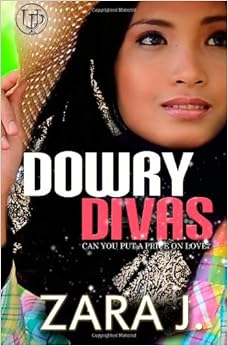
Book Review: Dowry Divas

As an avid reader with a special interest in Muslim fiction, I jump at the chance to read and review the newest books on the market, especially if they’re written by Muslim women authors. In the course of my Muslim-fiction-hunting, I came across a new name: Zara J, the author of Dowry Divas.

Described on Amazon as ‘The Muslim Sex and the City,’ Dowry Divas follows the complicated love lives of three Muslim women – Layla, Talia, Nadia – and the men they have either married, seek to marry, or are trying to marry them.

A hot-shot African-American lawyer who has just married the hottest Muslim attorney on the block, Layla finds herself completely unprepared to deal with an unwelcome guest at her glamorous wedding. Talia, a successful Latina entrepreneur, struggles with feelings of jealousy and loneliness, and decides to take the risk of seeking a soulmate on the Internet. Nadia tries to escape her father’s preferred candidate for marriage – and finds herself falling for Lateef, a man who already has one wife.
While the book is told from the perspectives of these three female characters, the men they’re involved with are equally fleshed out and dominate a great deal of attention.

Dowry Divas was very different from my usual reading material, which tend to revolve around women in difficult situations who face down their challenges with inspiring strength and courage. To be honest, I found it difficult to relate to the three women – if anything, I empathized with the male characters most, although I had issues with some of them as well. Despite being described as ‘smart and sassy,’ I found the women to come off as both slightly flat and unrelatable – one domineering characteristic they all shared was a rather concerning (to me) obsession with material things, with a particular emphasis on money, designer clothing, purses, and so on. They appeared to be unashamedly jealous and obsessed over marriage, desiring men who had 'swag', money, and who were religious but not 'extremely' religious.

I also found that many Islamic references (ayaat, ahadith, and fiqh rulings) were tossed around in a rather awkward manner in an attempt to explain aspects of ‘Muslim-ness’, such as polygamy. Perhaps the author’s intent was to include these things for the sake of da’wah to non-Muslim readers, but from a literary perspective, I found it a clumsy and unskillful way of getting the point across. I strongly felt that the quality of the writing overall was slightly weak – both the characters and the plot could have been improved with some editing and more development.

While my review appears to be quite negative, the truth is that this was my own personal reaction to a specific genre, which others may find enjoyable. While the characters in this book did not reflect the Muslim women or situations that I am acquainted with, it did make me aware of the fact that there are Muslim women out there for whom these circumstances are a reality, and therefore would be better able to relate the story.

At the very least, it is good to see more Muslim writers, especially women of colour, coming forth and contributing to the genre of Muslim fiction with their own unique perspectives. My only suggestion would be that instead of rushing to produce more books, whether self-published or otherwise, such authors should take the time to develop their skills and polish their work. It is important that the burgeoning genre of Muslim literature should reflect skill as well as talent, quality as well as quantity.

Dowry Divas is a book with a great deal of potential, and has an intriguing premise, though it will undoubtedly resonate with certain readers more than others.

Rating: 2/5 stars

AnonyMouse (Zainab bint Younus) is a young Muslimah who has been reading and writing for as long as she can remember. She is a writer (for SISTERS Magazine, SaudiLife.net, OnIslam.net and elsewhere), as well as a freelance editor who has worked for international Islamic publishing companies such as Darussalam and IIPH. She also blogs at http://www.thesalafifeminist.blogspot.com

Wednesday, December 24, 2014

"Did A Woman Edit the Qur'an?" - Book Review

Ruqayyah Y Khan's article-turned-book "Did A Woman Edit the Qur'an? Hafsah and Her Codex" has garnered some amount of attention as being daring and revolutionary in the field of Muslim feminist Qur'anic studies. Although being aware of the obvious agenda that was likely behind it, I was most certainly intrigued by the focus on Hafsah bint 'Umar (radhiAllahu 'anha) and her role in the preservation of the Qur'an.

Despite the incredible potential that this book could have had, I was sorely disappointed by the almost bizarre way that certain basic facts regarding the Qur'an and the biography of Hafsah (radhiAllahu 'anha) were glossed over.

To begin with, the title of the book is both obvious and unsubtle with regards to the agenda it is pushing forward; the continued use of the phrase 'edit the Qur'an' makes it clear that the author is approaching the subject from the perspective of one who does not consider the Qur'an to be perfect (which is a common enough belief amongst many progressive groups). Despite expecting this perspective in the first place, I found the thread of intellectual dishonesty that ran through the entire work to be extremely distasteful. While numerous hints are provided about how the suhuf (scrolls/ manuscripts) of Hafsah (radhiAllahu 'anaha) differed from the standard mus'haf Uthmaani, there is a deliberate and obvious attempt at implying that her copies different in actual *content* of the Qur'anic ayaat rather than the very obvious and well-known understanding that there were various recitations (qira'aat) of the Qur'an that were known to the early Muslims.

Furthermore, it astounds me that the classically and almost universally known position regarding RasulAllah’s literacy – that he wasn’t – is completely disregarded in the book, as is demonstrated in the following quotation:
“Muḥammad is shown instructing Hafsạ in the Qur’ān as well as writing Qur’ānic verses for her.

Abu l-Aswad related [that] ‘Urwa b. al-Zūbayr said, “People differed over the recitation of ‘Those who disbelieve from among the People of Book . . . ’[Q 98: 1], so ‘Umar b. al-Khatṭ ạ̄ b came to Hafsạ , [bringing] with [him a scrap of ] leather (adīm). He said: When the Messenger of God comes to you, ask him to teach you ‘Those who disbelieve from among the People of the Book’ . . . and tell him to write it for you on this [scrap of ] leather. She did [this], and he [i.e., Muḥammad] wrote it for her. This reading became public and widespread [’āmma]. (Ibn Wahb 2003: 62)"

As a non-expert on seerah, I found it mind-boggling that one of the most basic facts regarding the Messenger of Allah (sallAllahu ‘alayhi wa sallam) and indeed, one of the most amazing aspects of the miracle of the Qur’an itself, was completely ignored and in fact denied here. After all, RasulAllah was known very specifically as "nabiyy umiyy" - the illiterate Prophet!

Three questions immediately came to mind as I read this quote: How accurate is this quote (e.g. is it given in context with regards to its placement in the original author’s work), how correct is its translation, and how authentic is the quote itself?

Khan goes on to say:
“‘Umar is shown as asking Hafṣa to edit the Qur’ān on the basis of Muḥammad “teaching” her the correct recitation and writing of the said verse."

This, by itself, highlighted to me both the obvious agenda (once again, the usage of the phrase ‘edit the Qur’an’) and ignorance of the entire process of the recording, preservation, and transmission of the Qur’an. In addition, combined with the previous quote allegedly from Ibn Wahb, it seems rather clear to me that the issue was not the actual wording of the verses, but the qiraa’ah (recitation) of them instead. As well, this insistence that Hafsah (radhiAllahu 'anha) alone had some kind of monopoly on the written text of the Qur'an is either ignorant of or deliberately glossing over the entire communal effort and process of the preservation of the Qur'an - that which is known as a whole as the system of the sanad (chain of narration).

One particular section in Khan’s work is where she discusses the relationship between RasulAllah (sallAllahu ‘alayhi wa sallam) and Hafsah (radhiAllahu ‘anha), going so far as to claim that she was his ‘least favourite wife’ and “there is nothing in the sources to suggest that there was a spark of attraction and/or affection between them in the stage before their marriage.”

Not only does this somehow imply that RasulAllah (sallAllahu 'alayhi wa sallam) was involved with any of his wives before marriage, but it also completely disregards the famous story of how RasulAllah married Hafsah (radhiAllahu 'anha). When her first husband was martyred, Umar went to both Abu Bakr and Uthmaan asking if they wanted to marry Hafsah. Both of them demurred, and Umar was dejected and went to RasulAllah to complain about them. In turn, RasulAllah told him "Hafsah shall marry someone better than Uthmaan, and Uthmaan will marry someone better than Hafsah." In this way, RasulAllah proposed marriage to Hafsah through 'Umar - and it was his intention to marry Hafsah which both Abu Bakr and Uthmaan had been aware of. 

What grated on my nerves most, however, was a rather bizarre fixation on the alleged stigma behind the one-divorce of Hafsah (radhiAllahu 'anha) and how it affected her status amongst not only the wives of RasulAllah, but as one of the most important people involved in the role of preserving the Qur'an. 
In "Did A Woman Edit the Qur'an?" itself, Khan refrains from mentioning the cause of Hafsah's divorce, despite the fact that the incident surrounding which most scholars mention in the tafseer of Surah at-Tahreem as one of the related asbaab an-nuzool - reasons for revelation). Strangely, Khan implies that because of this incident, Hafsah (radhiAllahu 'anha) was somehow considered 'lesser' or simply not taken as seriously by the wider Muslim community and later scholars. The emphasis on her divorce also ignores the time that RasulAllah (sallAllahu 'alayhi wa sallam) offered all his wives the option of divorce. 

Finally, despite Khan stating in her introduction that the focus of her book is 'modern western scholarship on how the Qur’ān came to be compiled and codified,' there are various statements and phrasing in the book that imply that classical Islamic scholars are at fault for minimizing or erasing the true extent of Hafsah's influence with regards to her role in the preservation of the Qur'an. 

For example: 
"It is at least worth asking: could the classical Islamic tradition have devised this first story (regarding Abū Bakr–‘Umar) to suppress and marginalize agency attributed to Hafṣa as regards editing and/or writing the sheets of the Qur’ān (i.e., ṣuḥuf)?"

Essentially, she seems to be making the case for a vast conspiracy theory that sought to render Hafsah (radhiAllahu 'anha) as irrelevant to one of the most important events of Islamic history... a theory which relies heavily on making it seem that Hafsah alone played a crucial role in preserving the Qur'an, and ignoring the vast and complex science that was developed specifically for that purpose.  

Nonetheless, with all the above having been mentioned, I will say that the one aspect in which Khan did well was discussing Hafsah (radhiAllahu 'anha) with regards to her literacy and intelligence, and her close relationship with her father, 'Umar ibn al-Khattab (radhiAllahu 'anhu). 

As has been noted in a previous #ForgottenHeroines article, 'Umar (radhiAllahu 'anhu) was known as Abu Hafs - a remarkable occurrence when considering the extremely misogynistic, patriarchal society he lived in, and despite the fact that he had many sons whom he could - by Arab tradition - been named after instead. 
Furthermore, Hafsah is often described as being similar to her father in temperament: "Hafsah had in her nature an aspect of the meaning of her name: She was somewhat stern and tough. Perhaps, she inherited that from her father 'Umar, al-Farooq." (Source: Women Around the Messenger, Muhammad Ali Qutb).  
There are various stories about Hafsah and her father: That he would go to her with rebukes regarding her brother, Abdullah ibn 'Umar; that he would as her for political advice during his khilaafah, as well as consult with her on religious matters (including his famous fatwah prohibiting Muslim soldiers to be away from their wives for longer than four months); that the Ummah would approach her to appeal to him on their behalf; and that she was named the executor of his will upon his death.
While some individuals - including Khan - imply that the relationship between Hafsah and 'Umar was one of a man exerting power over his daughter for political influence, it seems to me that what is deliberately disregarded is that rather, they had a bond between them that was one of mutual affection and respect alike. Certainly, Hafsah was known not to be weak willed and easily influenced by others, and 'Umar, despite his reputation for being harsh and stern with men and women alike, remained close to his daughter for the duration of his life. Together, they clearly formed a formidable team which was respected by everyone around them, men and women.

As an academic work, I found "Did A Woman Edit the Qur'an?" to be blatantly biased (which, to be honest, I expected) and also greatly lacking in referencing the positive manner in which the story of Hafsah bint 'Umar (radhiAllahu 'anha) is usually recorded in traditional books of Islamic biographies. Nonetheless, it was a reminder to me of how desperately we need a revival of awareness and knowledge regarding the #ForgottenHeroines of Islam and their influence on Islamic history, and how conservative Muslims need to reclaim the telling of our own stories rather than leaving it up to others to remodel for themselves and their own agendas.